
The Complete Guide to Wall Sconce Placement for Modern Interiors
Lighting plays a crucial role in shaping the atmosphere of a home. While ceiling fixtures often provide the main source of illumination, wall lighting adds depth, balance, and character to a space. Among the many lighting options available, wall sconces stand out because they combine practical functionality with decorative appeal.
When installed thoughtfully, wall sconces highlight architectural features, create soft ambient lighting, and enhance the overall design of a room. However, their effectiveness depends heavily on correct placement. The right height, spacing, and alignment ensure the lighting feels balanced rather than overwhelming.
Understanding how to position wall sconces properly allows homeowners to create interiors that feel refined, comfortable, and visually harmonious.
Why Wall Sconce Placement Is So Important
Wall sconces do far more than simply illuminate a wall. When positioned correctly, they help shape the atmosphere of a room by controlling how light spreads across surfaces. Proper placement softens shadows, reduces glare, and enhances visual balance.
On the other hand, poorly positioned lighting can disrupt the design of a space. A fixture installed too high or too low may create uneven illumination, while inconsistent spacing can make a wall feel cluttered.
Interior designers therefore pay close attention to proportion and symmetry when planning wall lighting. By carefully considering how light interacts with furniture, artwork, and architectural elements, they ensure the lighting becomes a natural part of the interior design.
Standard Wall Sconce Height Guidelines
Although every home is unique, designers usually begin with a set of general placement guidelines that work well in most interiors.
Ideal Height from the Floor
The most common recommendation is to mount wall sconces so that the center of the fixture sits between 60 and 66 inches above the floor. This height positions the light slightly above eye level, helping to reduce glare and create a softer lighting effect.
For rooms with taller ceilings—particularly those higher than nine feet—the fixture can be mounted slightly higher to maintain visual proportion.
This placement typically works well in living rooms, hallways, and other shared spaces where ambient lighting is the primary goal.
Adjusting for Ceiling Height
Ceiling height should always be taken into account when planning lighting placement. In rooms with higher ceilings, fixtures installed too low may appear visually disconnected from the rest of the space.
In such cases, designers often adjust the placement upward to maintain balance. The goal is to ensure the fixture feels integrated with the architecture of the room.
How Far Apart Should Wall Sconces Be?
Spacing plays a major role in achieving balanced lighting. When fixtures are placed too close together, they can create visual clutter. When placed too far apart, the wall may appear unevenly lit.
Hallway Lighting
In corridors and hallways, sconces are typically spaced 6 to 8 feet apart. This distance allows light to spread evenly along the wall while maintaining visual rhythm.
Even spacing is especially important in narrow hallways where lighting directly influences how the space feels.
Flanking Mirrors or Artwork
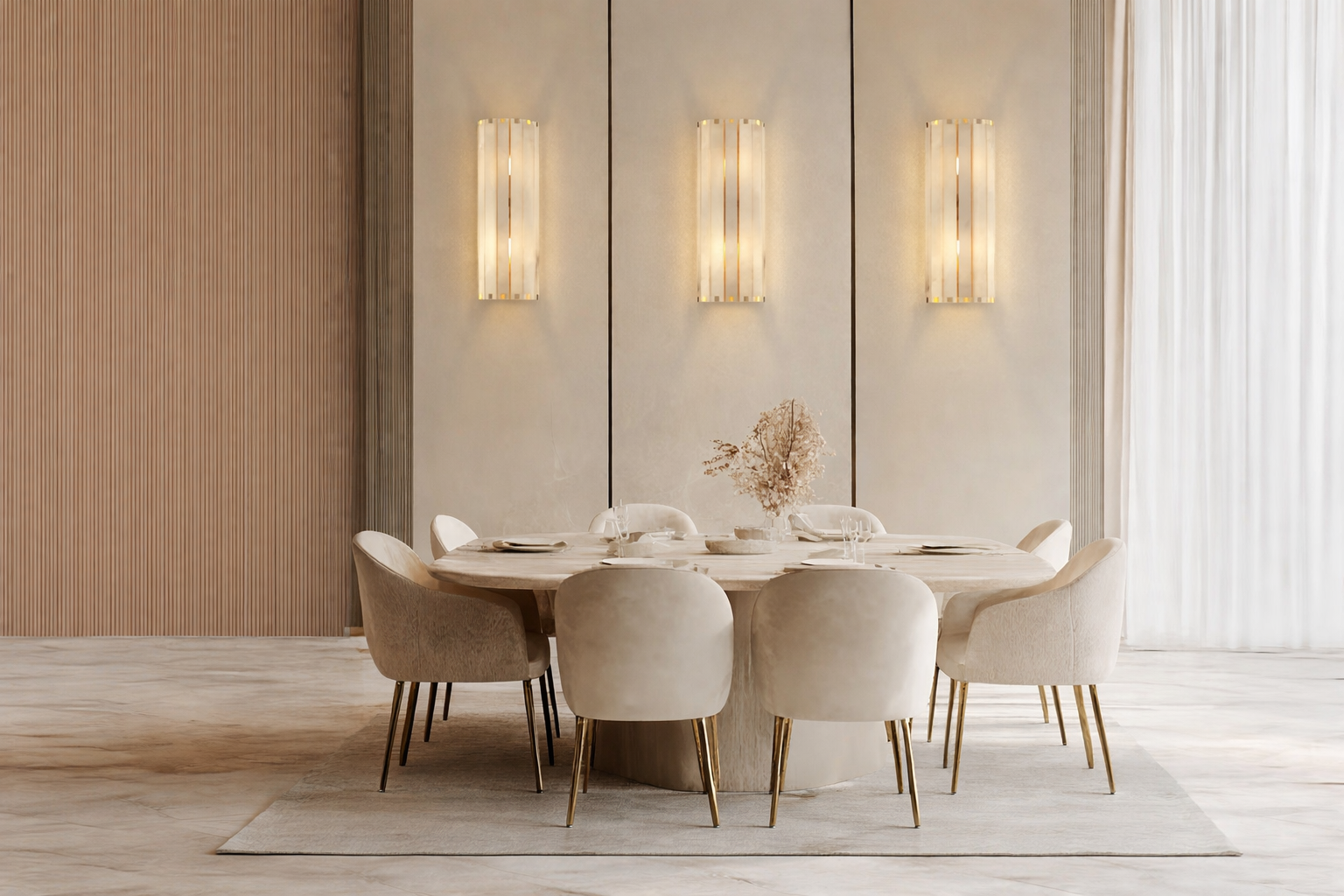
When wall sconces are used beside mirrors, artwork, or other focal points, designers often place them 36 to 40 inches apart, depending on the size of the central feature.
This symmetrical arrangement helps frame the focal point while ensuring the lighting remains balanced.
Staircases
Lighting staircases requires special attention because of the slope of the stairs. Fixtures should follow the incline of the staircase while maintaining consistent spacing to create a smooth visual line.
Wall Sconce Placement by Room
Different rooms require slightly different lighting strategies. Understanding the function of each space helps determine the ideal placement.
Bathroom Wall Sconces
Bathrooms benefit greatly from properly positioned wall lighting, especially around mirrors. Instead of relying solely on overhead lights, sconces placed beside the mirror provide more even illumination.
Designers usually mount bathroom sconces around 65 to 70 inches from the floor and position them on either side of the mirror. This placement helps eliminate shadows on the face, which is particularly helpful for grooming tasks.
Vertical sconces are often preferred in bathrooms because they distribute light more evenly across the face.
Bedroom Wall Lighting
In bedrooms, wall sconces are frequently used as an alternative to bedside lamps. This approach frees up space on nightstands and creates a cleaner aesthetic.
Fixtures are usually installed 5 to 7 inches above the top of the headboard and centered relative to each bedside table. It's also important to ensure that switches remain easily accessible from the bed.
Adjustable wall lights are particularly useful in bedrooms because they provide focused lighting for reading while maintaining a relaxed atmosphere.
Living Room Lighting
Living rooms often rely on multiple layers of lighting to create depth. Wall sconces can act as accent lighting that complements ceiling fixtures and floor lamps.
They are often installed near architectural features such as fireplaces, built-in shelving, or artwork. By highlighting these elements, wall lighting adds dimension to the room.
Another technique designers frequently use is wall grazing, where the fixture directs light along the surface of a textured wall. This effect enhances materials such as stone, wood panels, or decorative plaster.
Hallways and Entryways
Hallways and entryways benefit from evenly spaced lighting that guides movement through the home.
Installing sconces 60 to 66 inches above the floor and spacing them 6 to 8 feet apart helps create consistent illumination. Aligning fixtures with doors, artwork, or architectural features also contributes to a sense of visual rhythm.
Because hallways are often narrow, soft lighting is usually preferred over harsh brightness.
Installing Wall Sconces Safely
Beyond aesthetics, correct installation is essential for safety and performance.
A typical installation process includes:
-
Turning off the electrical power at the breaker.
-
Marking the placement of the fixture on the wall.
-
Installing an electrical box if one is not already present.
-
Attaching the mounting bracket securely.
-
Connecting the wiring correctly.
-
Installing the fixture and testing the light.
If the wiring process feels complicated, consulting a licensed electrician is always recommended.
Design Tips for Perfect Wall Lighting
Professional interior designers often follow several guiding principles when planning wall lighting.
Use Symmetry Whenever Possible
Symmetrical placement instantly creates a sense of balance and elegance. Pairing sconces on both sides of mirrors, artwork, or beds is one of the easiest ways to achieve a polished look.
Choose the Right Light Temperature
Bulb temperature significantly affects the atmosphere of a room. Warm white light between 2700K and 3000K creates a comfortable and inviting environment that works well in most living spaces.
Match Fixture Size to Wall Scale
Large walls can accommodate bold statement fixtures, while smaller spaces often benefit from more subtle designs. Choosing fixtures that match the scale of the room prevents the lighting from feeling disproportionate.
Layer Different Types of Lighting
The most comfortable interiors combine several light sources. Ceiling lights provide general illumination, wall sconces add ambiance, and table or floor lamps create localized lighting.
This layered approach ensures the space feels dynamic and adaptable throughout the day.
Creating Balanced and Beautiful Lighting
Thoughtfully placed wall lighting can transform the feel of an interior. By paying attention to height, spacing, and proportion, wall sconces become more than decorative fixtures—they become an essential element of interior design.
When combined with other light sources and integrated into the architecture of the room, wall lighting helps create a space that feels warm, balanced, and visually appealing.
Whether used in a hallway, bedroom, bathroom, or living room, well-positioned wall sconces contribute both style and functionality, making them a timeless lighting solution for modern homes.